
Would You Rather? The Game
TITANWARE S.LTrivia
3.55.02K Reviews
- Version
- 1.0.38
- Installs
- 5.00M
- Age Rating
- Mature 17+
Screenshots

Our Review of Would You Rather? The Game
 Analysis by Appyee
Some trivia games test what you know, while Would You Rather? The Game tests how quickly you can choose between two awkward, funny, or uncomfortable possibilities. I found that difference important from the first few rounds. It is not a traditional quiz with a correct answer to memorize; it is a conversation starter built around “which option would you pick?” questions. That makes it much more enjoyable with friends than when played as a serious solo challenge.
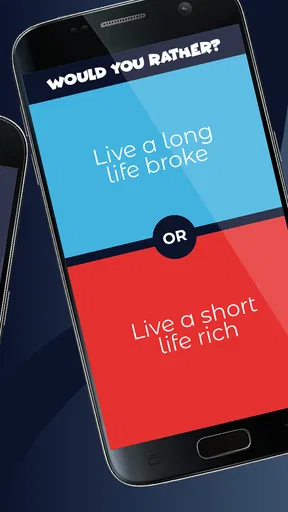
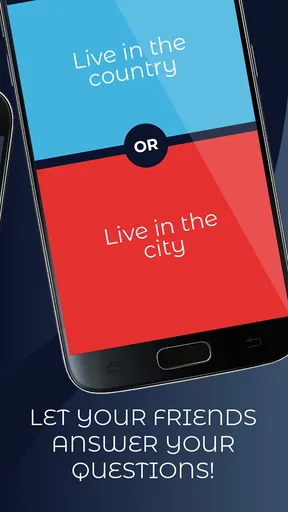
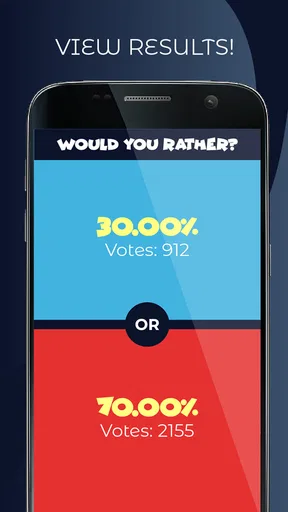
The basic idea is immediately understandable. A question appears, you select one of two choices, and the game moves on to another dilemma. The appeal comes from comparing answers, defending your choice, and discovering that someone you know has a surprisingly different limit. The developer is TITANWARE S.L, and the game sits in the trivia category, although its real strength is social play rather than factual learning.
I would describe it as a quick party game for spare moments. It works when a group is waiting for food, when a conversation needs a push, or when friends want something lighter than a competitive board game. It is free to start, but the mature content rating matters: this is intended for adults, not children, and some questions may feel too personal or uncomfortable for a mixed-age gathering.
How the basic question-and-answer flow works
I find the game works best when the group treats each prompt as a quick choice rather than a quiz with a right answer. One person can read aloud while everyone decides, then the conversation can linger only when a dilemma genuinely sparks interest. That simple rhythm keeps the phone from taking over the gathering and sets up a closer look at how to keep each round moving.
A simple routine that suits short sessions
My usual approach is to open a round, read the question aloud, and give everyone a few seconds to choose before anyone explains their answer. That small pause makes the game more revealing. If one person immediately argues for an option, others can be influenced before making their own choice. Keeping the first reaction private, even briefly, turns each question into a better group discussion.
The game is especially easy to introduce because no long tutorial or rules briefing is needed. One person can hold the phone and act as the reader, or the device can be passed around so each player gets a turn. I prefer assigning a reader for a whole session because it keeps the rhythm moving and avoids spending more time handing over the phone than discussing the choices.
There is no need to treat every question as a debate. Some choices are obvious, some are ridiculous, and others expose personal priorities. The best sessions mix all three. When a question creates a strong reaction, I let the group talk for a minute; when it falls flat, I move on quickly instead of trying to force entertainment from it.
That is the first useful habit with this game: use the question as a prompt, not as a test. Players who expect a conventional trivia score may find the experience vague or unsatisfying. Players who want conversation, teasing, and quick decisions usually understand the appeal much faster.
Making it work in an everyday situation
Imagine a few friends meeting before a film starts, with ten minutes to fill and nobody wanting to commit to a full game. This is where I think the app fits best. One person opens it, reads a handful of dilemmas, and the group answers while standing or sitting casually. There is no need to prepare cards, keep a score sheet, or explain a complicated turn order. When the film is about to begin, the session can simply stop.
It also works during a longer evening, but I would not run every question at the same intensity. A useful pattern is to play several quick rounds, pause when a question sparks a story, and then continue. If the group tries to analyze every choice, the pace slows and the game starts to feel repetitive. The phone is most useful as a steady source of prompts, not as the center of the entire evening.
For couples or close friends, the experience changes. The questions can reveal preferences and boundaries, but they can also become uncomfortable if one person treats every answer as evidence of character. I recommend agreeing beforehand that unusual answers are part of the game. That keeps a playful choice from turning into an argument about real-life behavior.
Who gets the most from it
I think the strongest audience is a group of adults who already enjoy conversational party games. It is also useful for people who dislike games requiring acting, drawing, or complicated strategy. You can participate quietly, answer quickly, or explain your reasoning at length. That flexibility makes it easier to include a friend who is shy or not interested in traditional competitive games.
It is less suitable for someone looking for reliable general-knowledge practice. If your goal is to improve geography, science, history, or language recall, a conventional quiz app will serve you better. This game uses the language and shape of trivia, but the challenge is personal judgment rather than knowledge accuracy.
I would also skip it for a family gathering with young children. The mature 17+ rating is not a minor detail, especially when the phone may be passed around without an adult checking the next prompt. For an adult-only group, the rating sets a clear expectation. For everyone else, a child-friendly alternative is the safer choice.
Settings and choices worth checking first
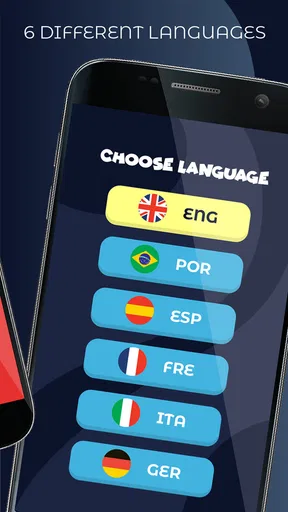
Experienced players should spend a moment looking through the available settings and content choices before beginning a group session. I would not assume that every question suits every audience. A relaxed evening with close friends can tolerate more personal material than a workplace gathering or a first meeting between people who barely know one another.
The practical trick is to decide the audience before opening the first round. If the group wants harmless humor, keep the session focused on easy, imaginative dilemmas. If everyone is comfortable with mature themes, establish that agreement openly rather than surprising someone with a question they would rather not answer. The app’s age rating supports that caution, but the social setting still matters more than any label.
I also recommend checking whether sound, notifications, and display behavior are comfortable for the situation. A party game does not need to be loud to work, and a quiet setting may be better served by reading questions directly from the screen. If the phone is being shared, increase the time spent looking at the group rather than leaving everyone waiting while one person navigates.
Another useful preparation step is deciding who controls the device. Passing it after every question sounds fair, but it can interrupt the flow. Keeping control with one reader creates a smoother session, while rotating the reader after a short set gives everyone a role without constant interruption. This is not a special feature; it is simply a better way to use the game’s straightforward format.
The current version is 1.0.38, and it is available for devices running Android 7.0 or later. That makes it accessible to people using older compatible phones, although the actual comfort of reading questions depends on screen size and brightness. On a small display, I found it more pleasant for one person to read aloud than for several players to crowd around the phone.
Building faster patterns for repeat sessions
Once a group understands the rhythm, the best improvement is to remove unnecessary hesitation. I use a three-step pattern: read the dilemma once, give everyone a short moment to decide, and then ask for reasons only when the choice seems interesting. This avoids turning every prompt into a formal vote while preserving the conversations that make the game worthwhile.
A second pattern is to let the person with the strongest reaction speak last. If someone immediately laughs or complains, that reaction can shape the rest of the group. Asking quieter players first produces more varied answers and prevents the most confident player from becoming the unofficial leader of every round.
For larger groups, I would divide the room into pairs or small clusters. Each cluster can agree on an answer, then compare it with the others. That changes the activity from a sequence of individual responses into a quick negotiation exercise. It also avoids the common problem where only two people keep talking while everyone else waits.
For a couple, I prefer alternating control of the phone and asking one follow-up question after each choice: “What made you pick that?” The follow-up should be optional. Some dilemmas are funny precisely because the answer is instinctive, and pressing for a serious explanation can drain the humor.
There is also a useful stopping rule. End a session when the group is still enjoying the questions, rather than waiting until everyone is tired of them. Because the game is free to start and easy to reopen, there is little benefit in exhausting the format in one sitting. Short, repeatable sessions make the app feel fresher than a marathon run through every prompt.
Where the game has limits
The main limitation is that the experience depends heavily on the people around you. A strong group can make a simple dilemma entertaining, while a quiet or uncomfortable group may find the same question flat. The app supplies prompts, but it cannot create chemistry, resolve disagreements, or guarantee that a topic will land well.
The other limitation is the lack of a conventional success condition. Players who need points, rankings, winners, or a measurable improvement curve may feel that each round ends without enough closure. I see that as a deliberate part of the format, but it still means the game competes more with conversation cards than with serious trivia platforms.
Content sensitivity is another real consideration. A mature rating means I would not open it casually in a public setting without knowing what kind of audience is present. Even among adults, personal questions can cross a line depending on the group. A good host should feel free to skip a prompt immediately and never pressure someone to answer.
There is also the question of spending. The game is free, but optional in-app purchases range from $5.49 to $45.99 per item. I would begin without buying anything and judge whether the available experience already fits your group. Paying may make sense for someone who uses the app frequently and wants additional content, but occasional players should not assume that a purchase is necessary for a good first session.
Its public reception is mixed rather than flawless, with an average rating of 3.5 from around 97 thousand ratings and roughly 5 thousand written reviews. That matches my overall impression: the core idea is easy to enjoy, but the quality of a session depends on question variety, personal comfort, and whether the group wants discussion or competition. The game has reached over 5 million installs, so it clearly appeals to a substantial audience, but popularity does not remove those format limitations.
How it compares with ordinary trivia and party alternatives
Compared with a standard trivia quiz, this game removes the pressure of being right. That makes it more welcoming for players who dislike public mistakes, but less rewarding for anyone who enjoys learning facts and tracking progress. A quiz app gives you knowledge feedback; this one gives you social feedback. Neither is better in every situation.
Compared with physical “would you rather” cards, the phone is more convenient because you do not need to carry a deck or prepare a table. The trade-off is that a screen can distract from the group, especially if players start browsing or passing the device around without a clear turn. Physical cards often feel more social because the object sits in the middle; this app works best when one person uses the phone as a prompt reader and everyone else stays engaged.
Compared with multiplayer games built around competition, it is much easier to join and leave. There is no complicated setup and no need for equal skill levels. On the other hand, it lacks the strategic tension that keeps a competitive game interesting over many sessions. I would pair it with a more structured game rather than expecting it to replace one.
Compared with conversation apps aimed at couples or personal reflection, this title is broader and more playful. It can lead to meaningful discussion, but it is not designed to guide that discussion carefully. If you want prompts organized around relationship goals or emotional exercises, another category of app will be more appropriate. Here, the value comes from spontaneity and the freedom to interpret each dilemma casually.
What regular players should remember
My most useful advice is to treat the app as a host’s tool. Choose the setting, control the pace, skip anything unsuitable, and give people permission to answer without defending themselves. Those habits matter more than trying to find a perfect strategy. The game has no hidden mastery path that replaces good group judgment.
I would also avoid using every question as a personality diagnosis. Choosing an absurd option for a laugh does not necessarily reveal a real preference, and a serious answer does not require a serious debate. Keeping that distinction clear prevents the app from becoming awkward, particularly among coworkers, new acquaintances, or friends with different boundaries.
If you are organizing a gathering, open the game before everyone arrives and decide how the phone will be handled. That tiny preparation avoids the dead time of searching for settings while the group waits. It also gives you a chance to choose a comfortable tone before a mature prompt appears unexpectedly.
For repeat use, rotate the social format rather than simply replaying the same way. Try individual answers one night, team decisions another time, and a rapid-fire session when the group has only a few minutes. The questions may be similar in structure, but changing the way people respond gives the app more life without pretending it is a completely different game.
My recommendation after using it
Would You Rather? The Game is a good pick when you want an uncomplicated adult party prompt rather than a knowledge contest. I like how quickly it gets a group talking, how little preparation it requires, and how easily a session can fit into a short break. Its strongest feature is not complexity; it is the way a simple two-choice question can expose different personalities.
I would recommend it to friends who enjoy playful arguments, couples who are comfortable discussing unusual scenarios, and hosts who need an easy activity for an adult gathering. I would not recommend it as a study tool, a deep multiplayer challenge, or a child-friendly family game. People who need scores, progression, or carefully controlled topics may be happier with a conventional trivia app or a dedicated card game.
The free entry point makes trying it straightforward, while the mature 17+ rating and optional purchases deserve attention before you use it with others. Start with a small group, agree on boundaries, keep one person in charge of the phone, and stop before the conversation becomes forced. Used that way, this trivia-style game is at its best: a lightweight source of questions that helps people laugh, disagree, and occasionally learn something unexpected about one another.
Verdict
Strengths of Would You Rather? The Game
- Simple rules make it easy for anyone to start playing immediately.
- Offers a quick way to break the ice with friends or family.
- Works well for parties, road trips, and casual gatherings.
- Questions can lead to funny, surprising, and memorable conversations.
- Suitable for short sessions when you have limited time.
Limitations of Would You Rather? The Game
- Some questions may feel repetitive after extended play.
- A few choices can be awkward or uncomfortable for younger players.
- The game depends heavily on having a group willing to participate.
- Limited appeal if you prefer strategy, competition, or skill-based games.
- Some content may require parental guidance depending on the question set.
Similar Picks in This Category
View All
Millionaire 2026 Quiz & Trivia
Quiz & Trivia Games by Submarine Apps4.5

Brain Test 2: Tricky Stories
Unico Studio4.7

Trivia Crack: Brain Quiz Games
etermax4.4

QuizzLand. Quiz & Trivia game
Quiz & Trivia Games by Mno Go Apps4.8

Brain Test: Tricky Puzzles
Unico Studio4.7

Logo Quiz
bubble quiz games4.5
Frequently Asked Questions
What is Would You Rather? The Game?
Would You Rather? The Game is a question-based party and social game built around choosing between two difficult, funny, awkward, or unexpected options. After installing it, players can take turns answering prompts and comparing their choices with friends. It is designed for casual entertainment, conversation, and group play rather than complex gameplay or competitive progression.
Can I play Would You Rather? The Game with friends?
Yes, the game is primarily suited to playing with friends, family members, or other groups. Players can pass the device around or read questions aloud while everyone gives an answer. The experience works best when participants are comfortable discussing unusual or personal scenarios, since some prompts may be silly, embarrassing, or intended to encourage debate and laughter.
Does Would You Rather? The Game require an internet connection?
The internet requirements may depend on the version installed and the features you use. Basic question gameplay may be available offline if the relevant question packs are stored on the device, while advertisements, updates, online content, or certain multiplayer features can require a connection. Check the app listing and test the game offline after installation to confirm its behavior.
Is Would You Rather? The Game appropriate for children?
Parents should review the game’s age rating and question categories before allowing younger children to play. Although many prompts are harmless and family-friendly, some versions may include mature, uncomfortable, or suggestive questions. The app is generally more appropriate for teenagers and adults unless a clearly marked family-friendly mode or suitable question pack is available.
Is Would You Rather? The Game free to download and use?
The game may be free to download, but free versions can include advertising, optional purchases, locked question packs, or other limitations. Before downloading, review the store page for subscription details, in-app purchase information, and supported devices. If you plan to use it at a party, it is also worth checking whether premium content is necessary for a complete experience.
Play our best games!


